
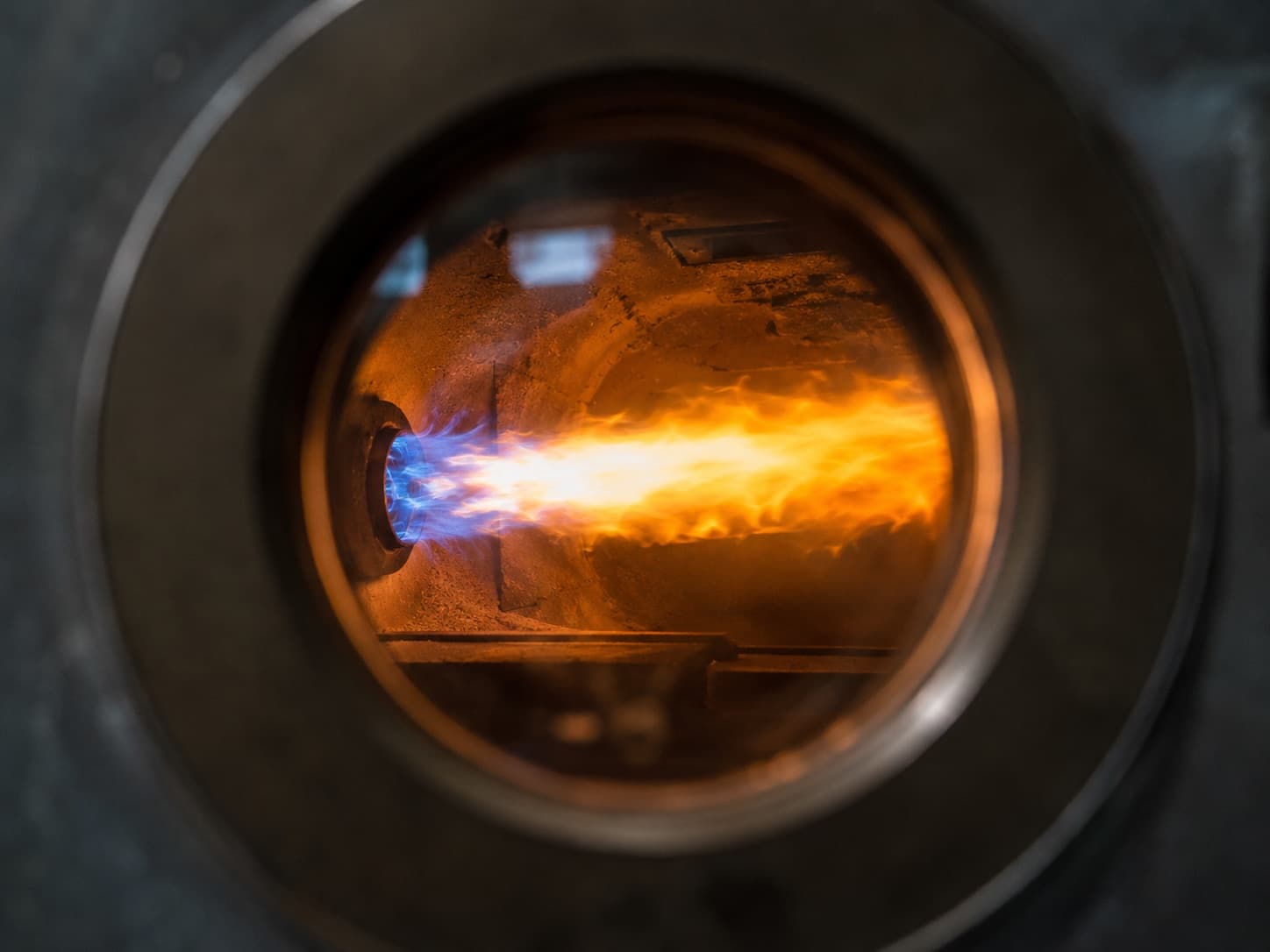
Soot formation and a dark or orange flame are almost always the visual sign of incomplete combustion — fuel leaving the combustion chamber without fully burning. The most common cause is insufficient combustion air, but a fouled nozzle, a misaligned diffuser, or a poor chimney draught can produce the same symptom. On natural gas, a healthy flame should be blue with a sharp, well-defined edge; sooting and a darkening flame are not something to wait out.
What does a healthy flame look like, versus a problem flame?
| Fuel | Healthy flame | Problem flame |
|---|---|---|
| Natural gas / LPG | Blue, sharp-edged, stable | Orange/yellow tips (mild), fully orange or smoky (serious) |
| Oil (gas oil) | Light orange-yellow, even conical shape | Reddish, wavering, sparking, or visibly smoking |
On oil burners, visual assessment is unreliable — soot formation can continue even when the flame colour looks normal. The reliable measurement is the smoke number (Bacharach) test, covered in our flue gas analysis guide.
6 common causes of sooting and a dark flame
| Cause | Explanation | Typical fix |
|---|---|---|
| Insufficient air | Air damper set too low, fouled fan impeller or intake grille | Cleaning and re-tuning the combustion setting with a flue gas analyser |
| Fouled nozzle / gas head | Worn or blocked nozzle, distorted spray pattern | Nozzle replacement |
| Misaligned diffuser | Fuel–air mixture is not being shaped correctly | Reposition to manufacturer's dimensions |
| Over-firing | Burner not correctly matched to boiler back pressure | Review capacity and selection — see what is a burner |
| Chimney draught problem | Insufficient draught raises back pressure on combustion products | Flue inspection and cleaning |
| Contaminated oil | Water or sludge in the fuel, or incorrect pump pressure | Filter/fuel check, pump pressure adjustment |
Why this is a safety issue, not just a cleanliness one
Soot formation signals the same incomplete combustion that produces carbon monoxide (CO). See the CO table in our flue gas analysis guide for how to assess CO levels. Accumulated soot also insulates heat exchanger and flue surfaces — reducing efficiency further and, over time, building up combustible deposits inside the flue.
When is it an emergency, and when does routine maintenance suffice?
| Situation | Urgency |
|---|---|
| Heavy black smoke plus a burning/gas smell | Emergency — shut the burner down, call for service |
| Flame fully orange/smoky, output noticeably reduced | High — service should be booked promptly |
| Slight yellowing at the flame tip, performance normal | Medium — can be assessed at the next scheduled service |
| Only light soot visible on the heat exchanger at inspection | Planned — addressed within scheduled maintenance |
What you can do, and what you shouldn't
What you can do:
- Never block the plant room's air intake or exhaust vents
- Report any visible dirt or fouling on the intake grille
- Note the symptoms (smoke colour, smell, when it started) and pass them to the service engineer
What you shouldn't do:
- Open the burner casing and adjust the air damper or fuel setting yourself
- Repeatedly reset the burner when you notice smoke — as covered in our fault code guide, that carries its own separate risk
Frequently Asked Questions
Why does my burner's flame turn orange?
On natural gas and LPG a healthy flame is blue; turning orange is usually a sign of insufficient combustion air or a fouled nozzle/diffuser. Slight orange tips are an early warning; a fully orange, smoky flame is a serious combustion problem.
Is a sooting burner dangerous?
It can be. Soot formation is the visual sign of incomplete combustion, which typically comes with carbon monoxide (CO) production. If there is heavy smoke or a burning smell, shut the burner down and call for emergency service.
Can the cause of sooting be identified without flue gas analysis?
Visual assessment gives an indication only — on oil burners in particular, soot formation can continue even when the flame colour looks normal. A definitive diagnosis requires a calibrated flue gas analyser.
Will a sooting problem clear up on its own?
No. Sooting continues until the underlying cause — a fouled nozzle, air setting, chimney draught, etc. — is corrected, and it increases both efficiency loss and fault risk over time. ---
About Beray Enerji
Beray Enerji is an Istanbul-based burner service company operating across Türkiye, with primary coverage in the Marmara, Thrace and Aegean regions. We provide combustion problem diagnosis, flue gas analysis, combustion setting and fault repair for gas, oil and dual-fuel burners of all makes and models, backed by a technical team with 30 years of field experience. For emergency response, contact us on +90 (000) 000 00 00 or at info@berayenerji.com.
Related services: Burner repair service · Burner maintenance · Contact
References
- EN 676 — Automatic forced draught burners for gaseous fuels
- EN 267 — Automatic forced draught burners for liquid fuels