
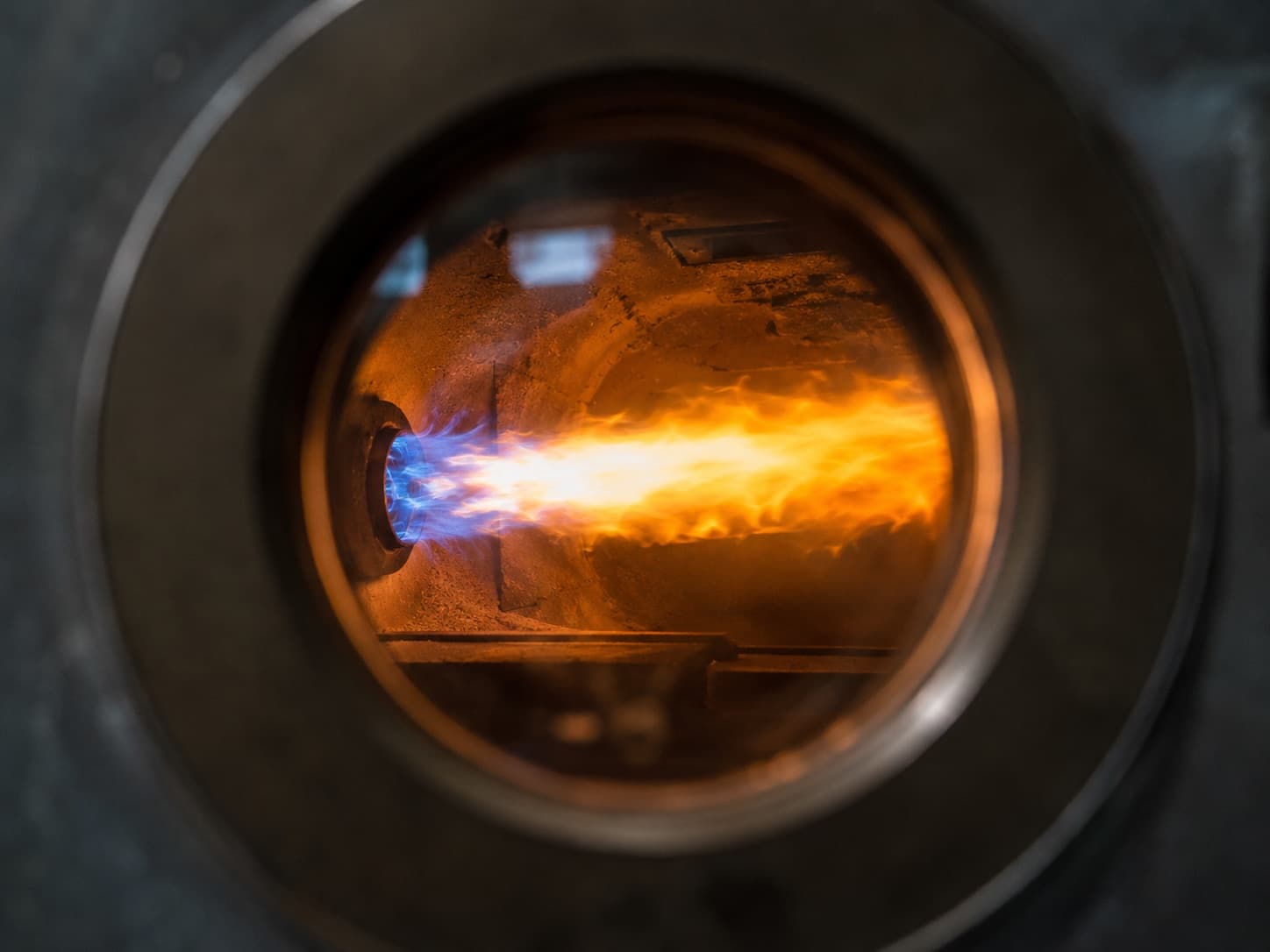
N+1 redundancy is the principle of keeping one standby unit (+1) beyond the total capacity a site actually needs (N) — so that if any unit fails, the remaining units can keep service running uninterrupted. Our hotel and hospital maintenance guide introduced this concept briefly; this article covers N+1 planning in detail, from capacity calculation through to testing protocol.
How does the N+1 formula work?
If a hotel needs 1000 kW of total capacity for hot water and heating (N=1000 kW), the N+1 approach recommends installing one additional standby unit capable of meeting that need. This can be implemented two ways:
- A full standby unit: a second burner/boiler set capable of meeting the entire required capacity on its own.
- A cascade (modular) system: total capacity is split across several smaller-capacity boilers/burners (for example, 4 x 300 kW = 1200 kW against an actual need of 1000 kW). If one unit fails, the remaining units continue to meet demand.
When is each approach preferred?
| Approach | Advantage | Drawback |
|---|---|---|
| Full standby unit | Simple design, immediate switch to full capacity on a single fault | Higher investment cost, the standby unit sits idle most of the time |
| Cascade system | More efficient operation under partial load, partial capacity preserved on a partial fault | More complex control system, multiple units to maintain |
Large hotels and hospitals often prefer the cascade system, because it also delivers more efficient operation during low-load periods (overnight, for example) — only as many units as needed run at once, rather than all of them.
Don't overlook maintenance on the standby unit
The principle covered in our dual-fuel burner guide applies here too: a standby unit that isn't being used still needs regular maintenance. On a burner left idle for a long time, risks can develop:
- Moisture build-up in electrical components
- On liquid fuel, filter blockage or fuel degradation
- Stiffness in mechanical components (fan bearing, valves) from inactivity
For this reason, the standby unit should be included in the standard maintenance schedule and tested by actually running it, regularly — simply having it sit there is not enough.
Automatic switchover testing
At critical sites, whether the standby unit automatically engages when the primary unit fails should be tested regularly. This test:
- Deliberately takes the primary unit offline under controlled conditions
- Measures how long the standby unit takes to engage
- Records how long it takes the engaged unit to reach target capacity
- Documents the results so they can be compared against the next test
Without this test, there's no way to be confident the standby system will actually behave as expected during a real outage.
Cost-benefit assessment
Two costs need weighing when deciding on a redundancy investment:
- Redundancy investment cost: the additional unit, installation, control system and ongoing maintenance
- Outage cost: guest/patient safety risk, reputational damage, possible compensation/cancellation costs, emergency response cost
At sites with near-zero tolerance for downtime (hospitals in particular), the redundancy investment usually comes in well below the cost of an outage.
Frequently Asked Questions
What does N+1 redundancy mean?
It's the principle of keeping one standby unit (+1) beyond the total capacity a site needs (N), so that if any unit fails, the remaining units keep service running uninterrupted.
Is a full standby unit or a cascade system better?
Both are valid approaches. A cascade system usually offers more efficient operation and partial capacity preservation on a partial fault, while a full standby unit is a simpler design.
Does a standby burner that's never used still need maintenance?
Yes. A unit left idle for a long time can develop moisture build-up, filter blockage or mechanical stiffness; the standby unit should be regularly run and tested.
How often should automatic switchover testing be carried out?
At critical sites, this test should be carried out at regular intervals (alongside scheduled maintenance, for example) with results documented. ---
About Beray Enerji
Beray Enerji is an Istanbul-based burner service company operating across Türkiye, with primary coverage in the Marmara, Thrace and Aegean regions, providing redundancy planning and burner maintenance for hotels and hospitals. We offer N+1 capacity assessment, standby unit maintenance and automatic switchover testing, backed by a technical team with 30 years of field experience. To assess your site's redundancy needs, contact us on +90 (000) 000 00 00 or at info@berayenerji.com.
Related services: Burner maintenance · Burner sales and commissioning · Contact
References
- EN 676 — Automatic forced draught burners for gaseous fuels
- EN 267 — Automatic forced draught burners for liquid fuels